
Pewter vs Wood lovespoons
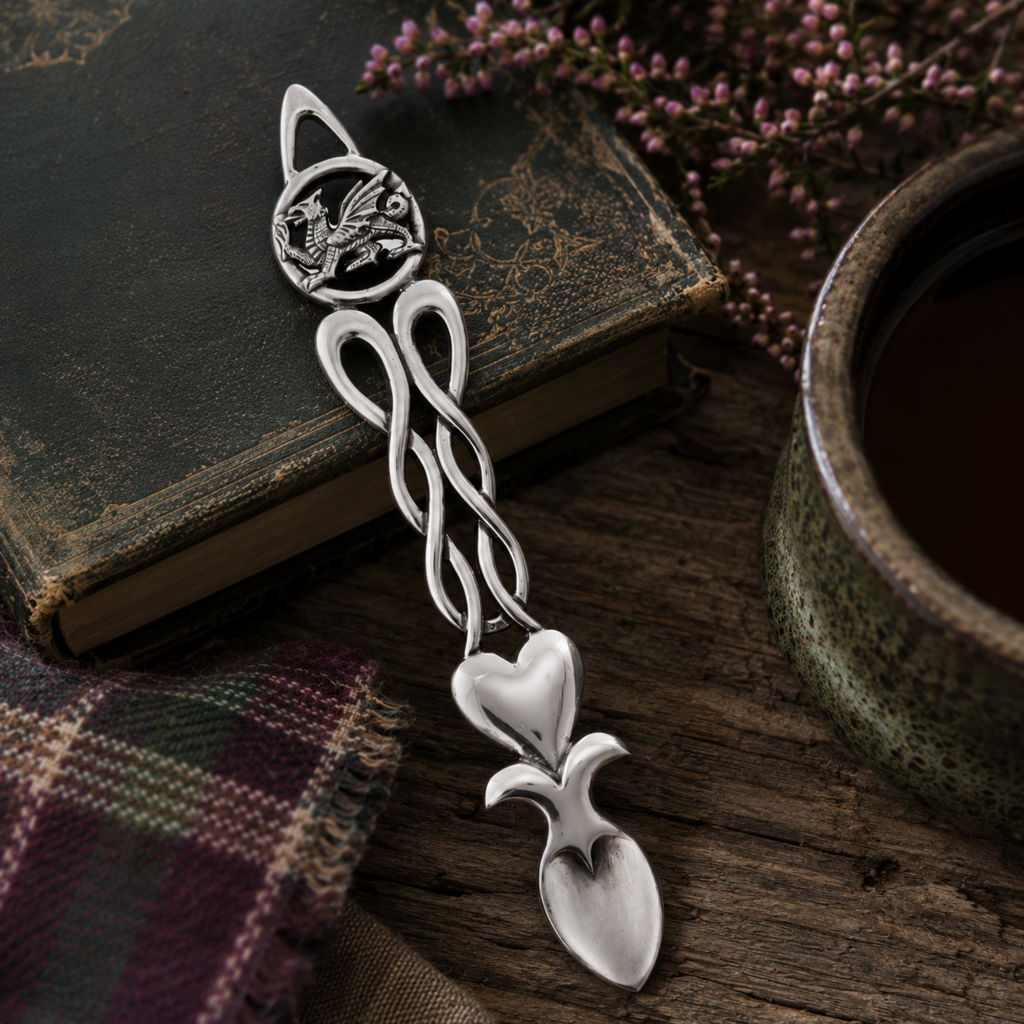
Pewter vs Wood Lovespoons: Which One Should You Choose in 2026?
Choosing between pewter vs wood lovespoons comes down to one simple question: do you want a keepsake that survives a single generation, or one that outlives all of them? Did you know that a hardwood lovespoon typically lasts around five years before wear, drying, or the odd kitchen mishap starts to show, even with careful care? That's the kind of detail that changes minds when a lovespoon is meant to be a lifelong gift rather than a passing trinket.
Key Takeaways: Pewter vs Wood Lovespoons at a Glance
- Longevity: Wood lovespoons need regular oiling and can crack or fade; pewter lovespoons are cast to last generations without splitting.
- Maintenance: Pewter wipes clean and never needs conditioning oil; wood demands ongoing upkeep to stay presentable.
- Symbolism stays the same: Whether cast in pewter or carved in wood, the Celtic knot and Welsh dragon carry the same centuries of meaning.
- Heirloom value: Pewter is built to be handed down; you can browse our own pewter lovespoon collection to see what a hand-cast heirloom actually looks like.
- Origin story: Our own casting tradition even started with a spoon mould, as we explain in the story behind our Well Spoon.
- Beyond the spoon: Once you've chosen your material, there's a whole world of matching keepsakes in our pewter gift range.
- Which is "better"? Wood suits traditionalists who love the warmth of grain; pewter suits anyone who wants a piece that's still being used and admired in fifty years' time.
What Is a Welsh Lovespoon, and Why Does the Material Matter?
A Welsh lovespoon isn't just a spoon. It's a token, carved or cast, given from one person to another as a mark of affection, and it's been part of Welsh courtship tradition for centuries.
Traditionally, lovespoons were whittled from a single piece of wood by a suitor hoping to prove his patience and skill. Today, the debate between pewter vs wood lovespoons is really a debate about what you want that token to do for you: sit pretty on a shelf for a season, or become a genuine family heirloom.
We're A E Williams, and we've been shaping British pewter since 1779. We're not just a bunch of people who like making stuff with molten metal; we're the oldest family-run pewtersmith in the world, and lovespoons sit right at the heart of what we do.
Pewter vs Wood Lovespoons: Durability and Everyday Wear
Wood is a wonderful, natural material, and there's no denying its warmth. But it's also a living material, which means it moves, dries, and reacts to the room it's kept in.
Pewter doesn't have that problem. We use traditional methods of casting our pewterware to ensure they are durable and made of high-quality materials that will last you through generations of use.
That 80% figure lines up with what we hear from customers every day. Nobody wants to spend their weekend oiling a spoon that's meant to be a symbol of love, not a chore.
Caring for Your Lovespoon: Pewter vs Wood Maintenance Compared
A wooden lovespoon needs conditioning oil every few months to stop it drying out and cracking. Skip that step and you'll watch the grain split, sometimes within a couple of years.
Pewter asks for almost nothing. A soft cloth and the occasional polish keep its soft grey lustre looking exactly as it did the day it left our workshop.
If you like the idea of a traditional carved look but want something a little sturdier than softwood, our slate spoon range sits nicely between the two worlds, offering a natural material with far more resilience than timber.
Quick Comparison Table
| Factor | Wood Lovespoons | Pewter Lovespoons |
|---|---|---|
| Expected lifespan | Around 5 years with care | Generations, if treated with basic respect |
| Maintenance | Regular oiling required | Wipe clean, occasional polish |
| Safety | Untreated wood can harbour bacteria | Lead-free casting, safe for you and your family |
| Display value | Warm, rustic charm | Soft grey lustre, understated elegance |
| Heirloom potential | Fragile over decades | Built to stay in the family for generations |
The Craftsmanship Behind a Hand-Cast Pewter Lovespoon
The story of A.E. Williams begins in 1642 when someone found an old spoon mould in a well. That's not a marketing line, that's genuinely how the trade in this corner of the British Isles is said to have started.
We've been shaping pewter properly since 1779, and we still cast using the largest and oldest range of antique bronze moulds in the world, some of them over 500 years old. Every lovespoon that leaves our workshop is hand-cast, lead-free, and built to stay in the family for generations.
When you weigh up pewter vs wood lovespoons on craftsmanship alone, it's worth remembering that wood carving is a skilled trade too. But pewter casting adds a permanence that whittling simply can't match, no matter how skilled the hand holding the knife.
Pewter vs Wood Lovespoons: Symbolism and Design Options
The good news is that the symbolism doesn't change depending on the material you choose. From the Welsh dragon to the Celtic knot, our British Pewter pieces carry centuries of meaning, and the same is true whether that dragon is carved or cast.
Some of the most requested designs we produce include:
- The Never Ending Lovespoon, symbolising unbroken love
- The Dragon and Daffodil Lovespoon, pairing two of Wales's most recognisable emblems
- Engagement and Wedding Lovespoons, designed specifically for those milestone moments
- 18th and 21st Birthday Lovespoons, a modern twist on a very old tradition
Wood carvers work with the same catalogue of symbols, but the fine detail of a Celtic knot or the scales on a dragon's back tend to hold their crispness far longer in cast pewter than in carved wood, where edges soften with handling over time.
Best for Gifting: Matching Your Lovespoon With Complementary Keepsakes
One advantage pewter has over wood is variety of finish across a whole gifting range, not just the spoon itself. Whether you need something as a gift for others, something for the house, or just a gift for yourself, we have what you need.
A pewter lovespoon keyring at £5.62 makes a lovely stocking filler that echoes a larger spoon you might give at a wedding. A brooch from £11.00 lets the recipient wear the same Celtic knot they've already got sitting on the mantelpiece.
If you're building out a proper anniversary gift set, our Tudor Goblet pairs beautifully with a lovespoon for a wedding table, and our pewter torc collection offers a similar Celtic knotwork motif for anyone who prefers jewellery to tableware.
Is Pewter Worth the Extra Cost Over Wood?
We've been around long enough to know they last. When you compare pewter vs wood lovespoons on price alone, wood often looks cheaper at first glance.
But cost per year tells a different story. A wooden spoon that needs replacing after five years works out far more expensive over a lifetime than a single pewter piece bought once and kept forever.
While wood remains the traditional material of choice, pewter has captured a notable share of modern Welsh lovespoon sales.
Welsh Craftsmanship Beyond the Spoon
Our products can be found in museums around the world as well as on sets from some of your favourite movies, and now they can be yours to own too. Pieces we've made have appeared in Harry Potter, Game of Thrones, Titanic, and Poldark, alongside our history of making teapots and sets for the opening of the Ritz Hotel back in 1926.
That's the kind of pedigree wood simply can't claim in the same way. Wood is beautiful and time-honoured, but pewter has a track record that spans film sets, palaces, and family kitchens alike.
Which Should You Choose: Pewter or Wood?
If you love the smell and feel of natural timber and don't mind a bit of upkeep, a wood lovespoon still carries genuine charm. There's nothing wrong with that choice.
But if you're buying for an engagement, a wedding, a christening, or any occasion meant to be remembered for decades rather than years, pewter is the safer bet. It's lead-free, hand-cast, and designed from the outset to become a family heirloom rather than a temporary decoration.
Every one is handcrafted, lead-free, and built to stay in the family for generations. That's the whole point of choosing pewter over wood in the first place.
Conclusion: Pewter vs Wood Lovespoons, the Final Word
When it comes down to pewter vs wood lovespoons, the choice really depends on how long you want the gift to matter. Wood offers warmth and tradition but asks for ongoing care and rarely survives more than a handful of years in daily display.
Pewter asks for almost nothing and gives back generations of use, a soft grey lustre that never fades, and symbolism that stays crisp for decades. If you're ready to see the difference for yourself, take a look through our full pewter lovespoon range and find the design that's going to become your own family's heirloom.
Frequently Asked Questions
Is pewter better than wood for a Welsh lovespoon?
For long-term durability, yes. When comparing pewter vs wood lovespoons, pewter resists cracking, drying, and staining in a way untreated wood simply cannot, making it the better choice for anyone wanting a genuine heirloom.
How long does a wooden lovespoon actually last?
Hardwood lovespoons typically last around five years with proper conditioning and care. Pewter lovespoons, by contrast, are built to last through generations of use with almost no maintenance.
Are pewter lovespoons safe to use and display at home?
Yes, our pewter lovespoons are lead-free and cast using traditional, safe methods, so there's no risk to you or your family. They're designed as much for display and heirloom use as they are for symbolic gifting.
What's the traditional symbolism behind a Welsh lovespoon?
Symbols like the Celtic knot represent everlasting love, while the Welsh dragon represents protection and heritage. Whether you choose pewter vs wood lovespoons, that symbolism stays exactly the same, only the material and longevity change.
Do pewter lovespoons cost more than wooden ones?
Pewter lovespoons can carry a slightly higher upfront price, but they typically outlast several wooden replacements over a lifetime. When you factor in the five-year lifespan of most wooden pieces, pewter often works out better value over time.
Is a pewter lovespoon worth buying in 2026?
Absolutely, especially with handmade goods enjoying strong demand across the UK this year. A hand-cast pewter lovespoon remains one of the few gifts genuinely built to become a family heirloom rather than a passing trend.
Can pewter lovespoons be personalised like wooden ones?
Yes, many of our pewter lovespoon designs, from engagement pieces to milestone birthday spoons, can be chosen or adapted for a specific occasion. The casting process allows for the same fine detail wood carvers pride themselves on, just with far greater longevity.